eAdvisor System - Phase II
eAdvisor is an insurance inquiry platform built for advisors. Building on the foundational redesign in Phase I, this phase focuses on modernizing one of the platform’s most used yet outdated components — the table-based operational workflows that advisors relied on daily.
Client
Hong Kong-based Insurance Group
Duration
2 Months | 2024
UX/UI Design | System Architecture
Tools & Stack
Figma, React, Tailwind
New Table Framework
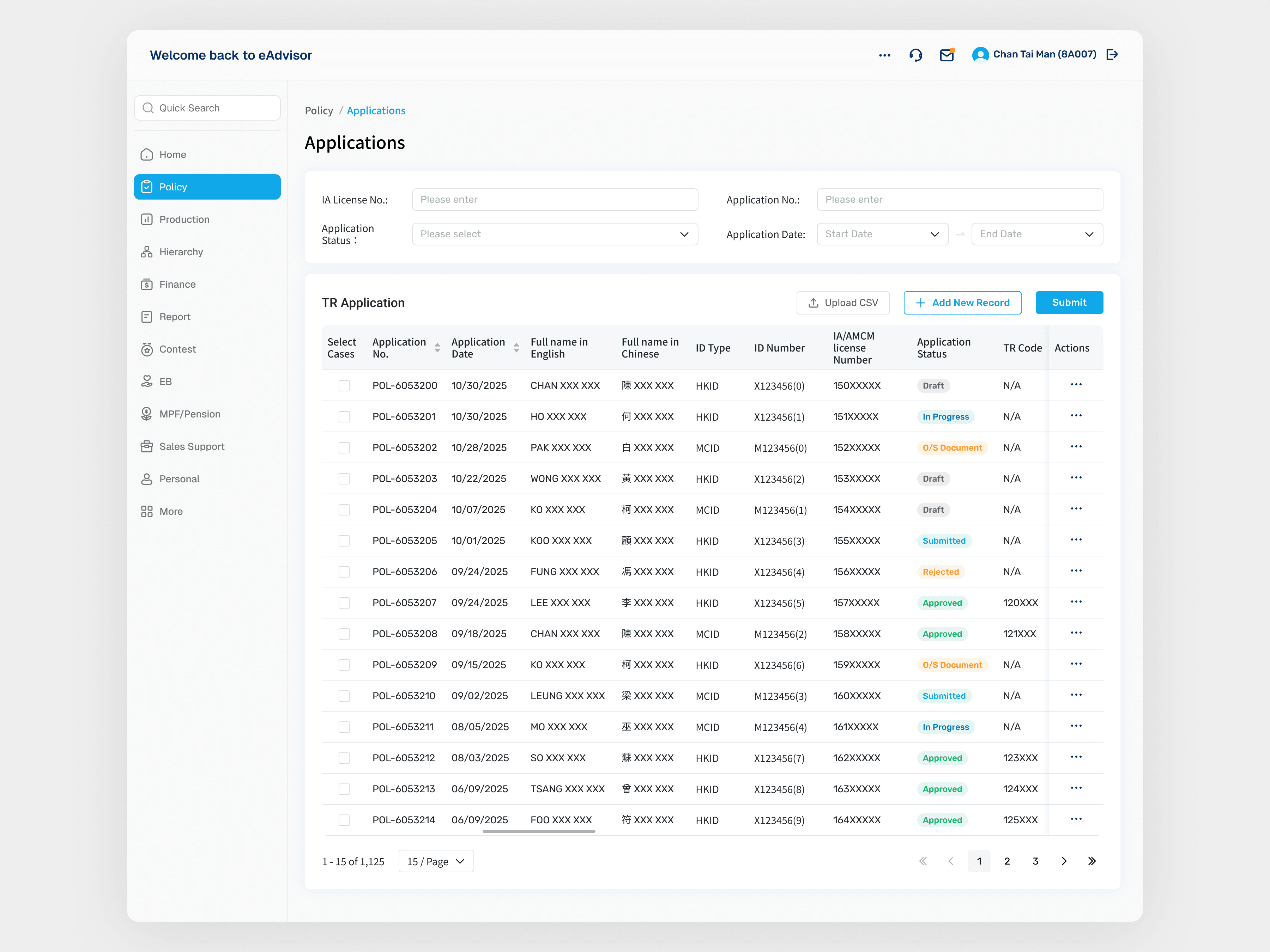
The legacy table design suffered from inconsistent layouts, frequent overflow issues, and inefficient navigation, making high-volume work unnecessarily complex. The redesigned table introduces a cohesive structure that unifies spacing, alignment, typography, and interaction patterns across all modules. This creates a stable visual and functional foundation that supports complex business logic while delivering a cleaner, more maintainable, and more readable experience for users handling dense data every day.
Overlay Workflow for Data Input
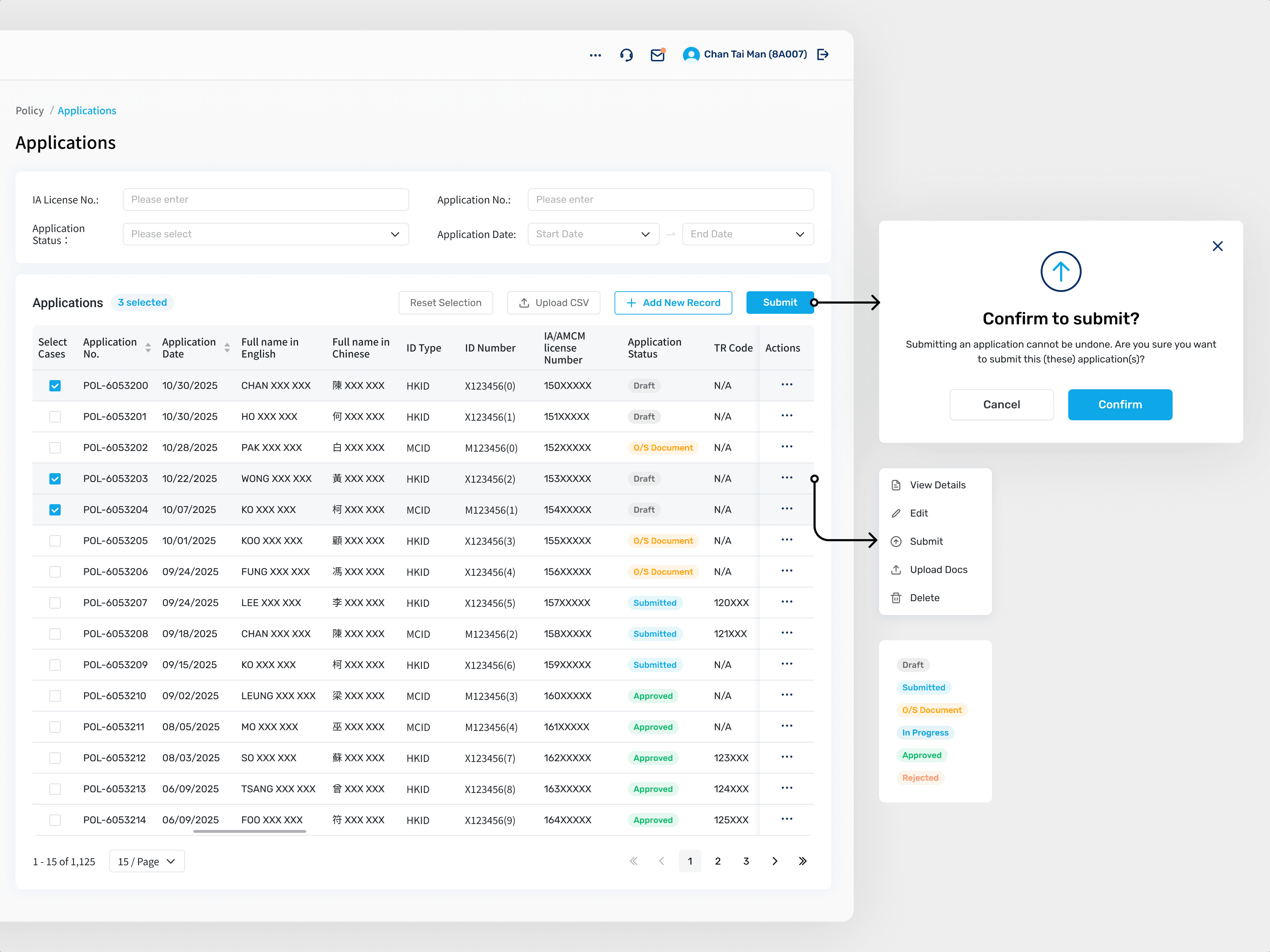
To streamline the high-frequency tasks of uploading data and creating new records, these workflows were shifted into an overlay-based interface. This enables users to complete multi-step actions without leaving the main table, reducing context switching and improving task continuity. By standardizing the input experience into a consistent, form-focused overlay, the system becomes both easier to scale and significantly more intuitive for users.
Record Details Structure
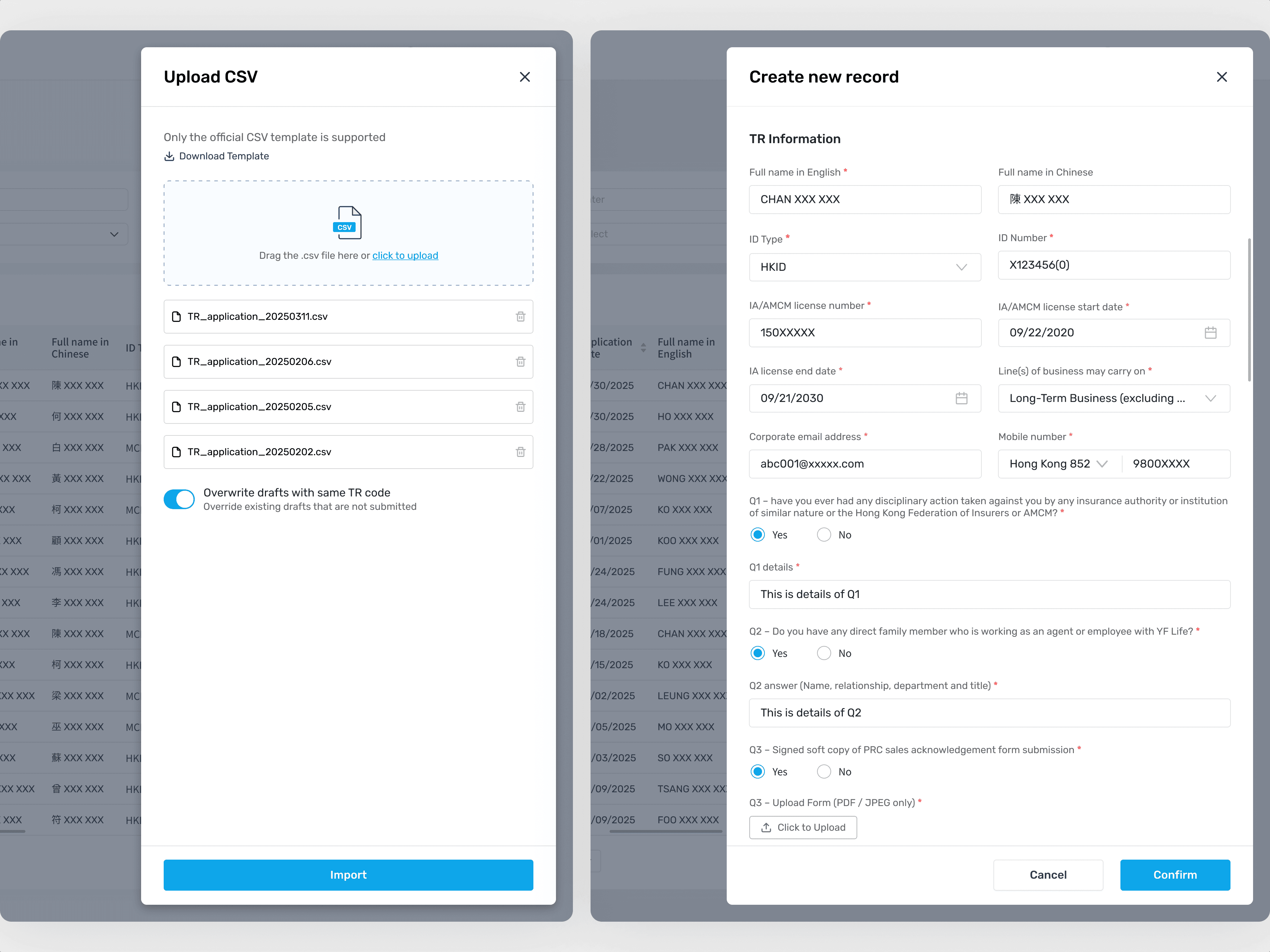
The record details were redesigned into a right-side slide-in panel, aligning with the interaction pattern used across form pages. This unified approach creates a lighter, more focused experience and eliminates unnecessary page transitions. By keeping users within the same screen context, the new structure not only improves operational efficiency but also maintains a consistent, modern interaction model throughout the system.
Outcome
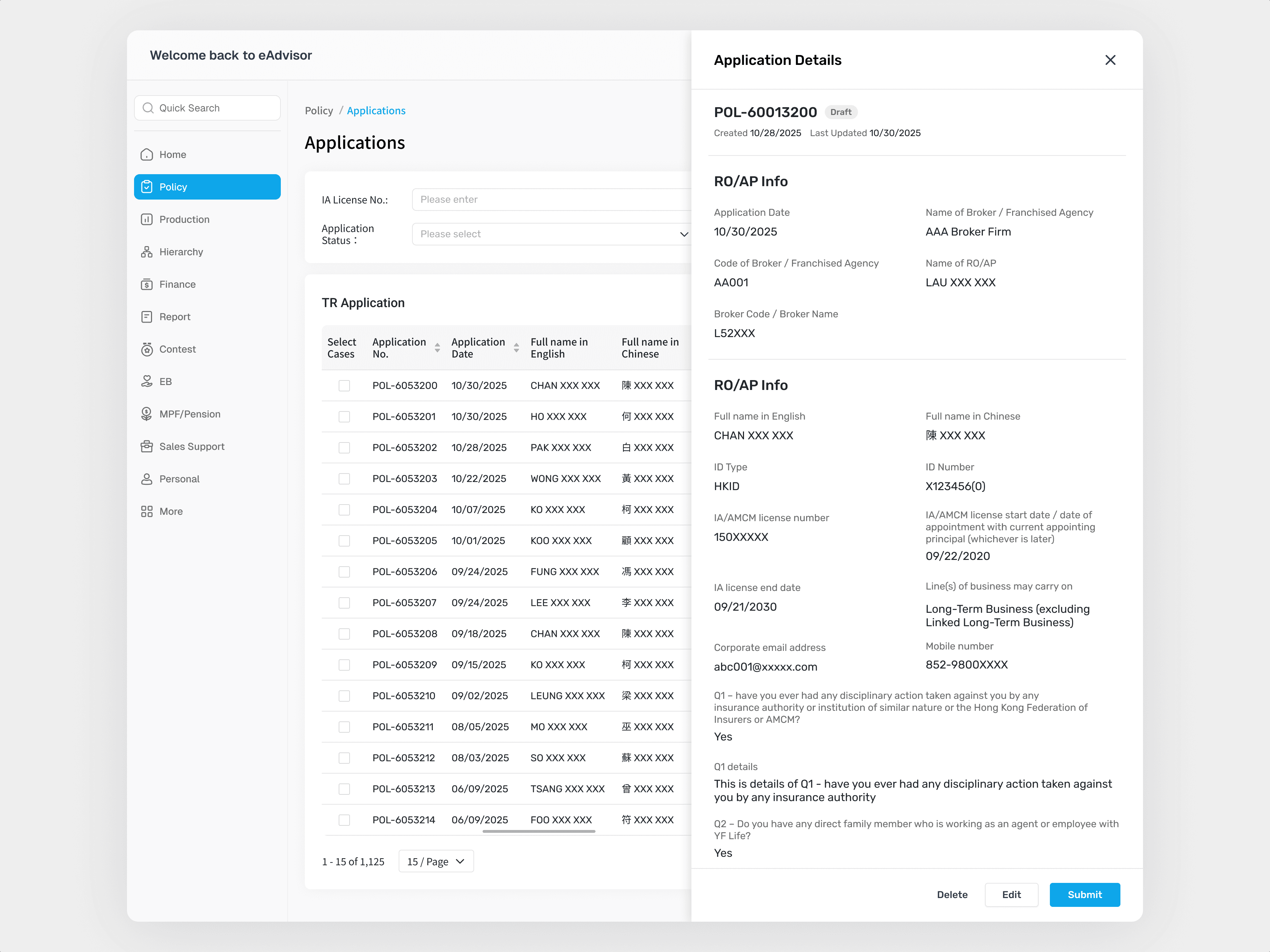
Phase II establishes a robust and scalable design foundation for all future modules within eAdvisor. The rebuilt table architecture, standardized workflows, and unified notification system collectively elevate the platform’s usability and operational reliability. This phase marks a significant step toward transforming eAdvisor from an outdated legacy tool into a modern, consistent, and advisor-centric platform ready for long-term evolution.